
New companies, we should stop trying to build a perfect brand like “Apple” or “IBM”.
Apple worked because it rose in an era of mass media monoculture. Everyone watched the same TV channels. Everyone read the same papers. You could buy the world’s attention.
We are now living in the era of Tribal Warfare.
The global market is fracturing into infinite sub-cultures. There is no longer a “Mainstream.” There are only streams.
And in this fragmented world, the “Safe, Professional, Global Brand” is invisible.
Why? Because humans have evolved a new biological filter: The Anti-AI Defense Mechanism.
As an AI founder, I see the tsunami coming.
We are about to be flooded with perfect, polished, “professional” content generated by AI. Infinite mediocrity, delivered at infinite speed.
Our brains are already adapting.
When we see a perfect logo? We ignore it.
When we read a perfectly structured corporate post? We scroll past.
We assume it is fake. We assume it is a bot.
“Professionalism” is now a red flag.
The only things that will penetrate this filter are Flaws, Edges, and Pulse.
The brands that win the next decade will be the ones that aggressively serve a specific group—and aren’t afraid to alienate everyone else.
The new status symbol, in my eyes, is Human Error.
It is the ability to show the glitch, the stumble, and the raw texture of reality.
If you try to please everyone with a sterilized brand, you will be ignored by everyone.
I want to show you why your inability to be professional is actually your biggest competitive advantage.
1) Weaponized Transparency (The Mint Mobile Effect)
The Old Way:
Brands like AT&T and Verizon spend millions on “Super Bowl” ads with CGI dragons and celebrity cameos. They try to signal Status (“Look how rich and powerful we are”).
The New Way:
Ryan Reynolds signaled Solidarity (“Look how I’m saving you money”).
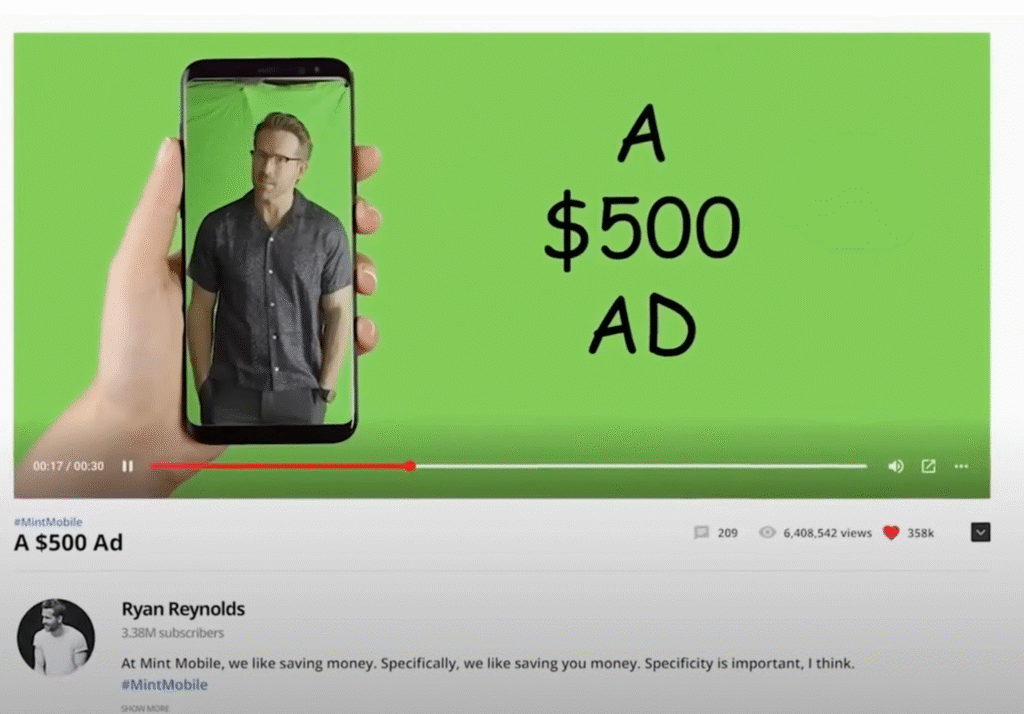
Instead of shooting a $5 million commercial, Ryan famously shot an ad using a PowerPoint presentation and a screen recording. He explicitly told the audience: “We spent $500 on this ad so we don’t have to raise your prices.”
He didn’t just “act” like a friend; he exposed the unit economics of the industry. He treated the customer as an insider who understands that a fancy ad = a higher phone bill.
The Lesson:
Don’t just be “transparent.” Weaponize your constraints.
Show the cheap set. Show the messy script. When you expose the “scam” of high-production marketing, you instantly position yourself as the only honest player in the room.
2) Hostility over Politeness (The dbrand Effect)
The Old Way:
“The customer is always right.”
Corporate brands are terrified of offending anyone. Their social media is run by a committee that apologizes for everything. They sound like a customer service bot.
The New Way:
dbrand (a company that sells phone skins) decided to be the Anti-Bot.
Go to their Twitter. They don’t apologize. They roast their customers.
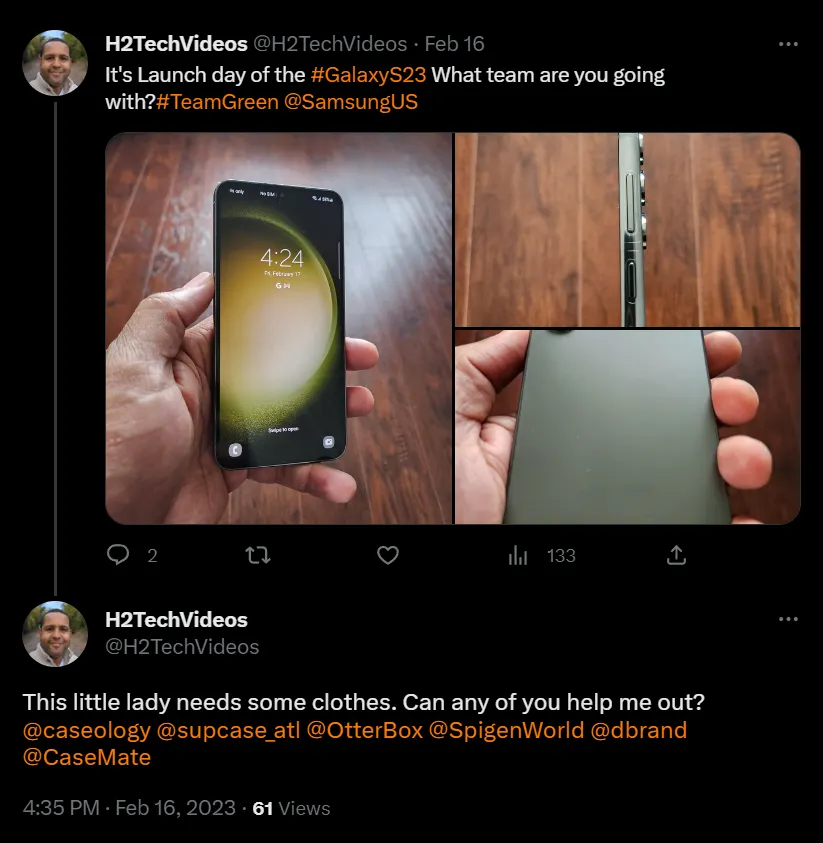
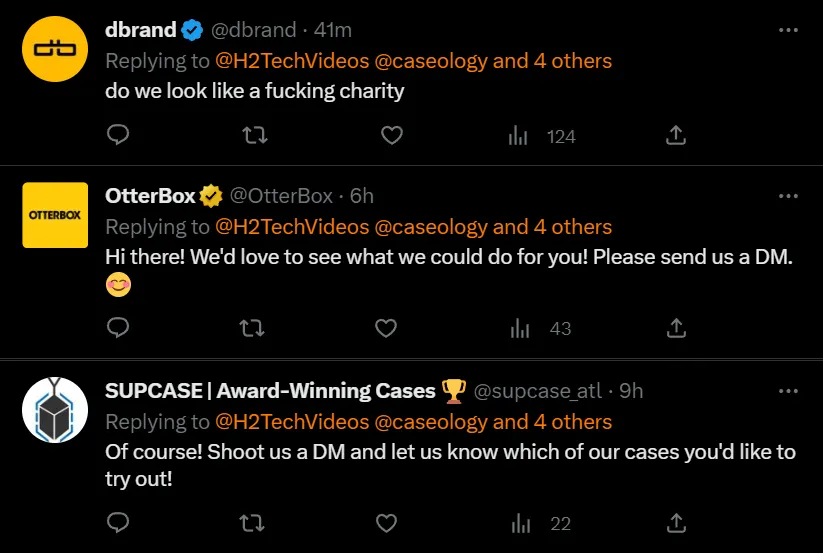
If you complain about their product being “just a piece of tape,” they agree with you and call you an idiot for buying it.
When Sony threatened to sue them for making PlayStation faceplates, dbrand didn’t issue a polite press release. They released a new line called “Darkplates” and put “Go Ahead, Sue Us” on the homepage.
The Lesson:
Politeness feels robotic. Sass feels human.
When a brand has the guts to fight back or make fun of its users, it signals confidence.
It proves there is a human behind the keyboard, not a LLM trained on “safety guidelines.”
3) Strategic Suicide (The Nike Effect)
The Old Way:
The cardinal rule of business was “Republicans buy sneakers, too.” (Michael Jordan). Brands tried to be water—formless, odorless, and offensive to no one.
The New Way:
Nike decided to be fire.

When Nike made Colin Kaepernick the face of their campaign, they knew exactly what would happen. People burned their shoes on YouTube. Their stock dipped. The media screamed “Disaster.”
But Nike ran the math. They knew their growth wasn’t coming from the angry boomers burning shoes; it was coming from the youth who wanted a brand with a spine.
Result: Online sales jumped 31% in the days following the controversy.
The Lesson:
If you aren’t generating hate, you aren’t generating love. You are generating indifference.
A “Living Brand” has enemies. It has a moral compass. It is willing to commit “Strategic Suicide” with one group to lock in “Eternal Loyalty” with another.
The “Human-First” Operating System
If I were advising a business owner today on how to survive the next 10 years, I wouldn’t tell them to buy more AI tools. I would tell them to execute these 3 strategic shifts.
1) The “Founder-Led” Strategy
If your website “About Us” page is a stock photo of people shaking hands, delete it.
Stop hiding behind the “Company We.” Start leading with the “Founder I.”
- For the CEO: you are the Chief Storyteller. You don’t need to be an influencer, but you need to be present.
- The Action: Once a week, record a 2-minute video on your phone. No script. No studio lighting. Just you, talking about why you built this feature, or what kept you up last night about the industry.
- The Logic: High production value signals “Marketing Budget.” Low production value signals “Truth.”
2) Define The “Anti-Persona” (The Exclusion Strategy)
Most businesses are terrified of losing a sale. So they write copy that appeals to everyone.
“We help businesses grow.” (Boring. AI-generated.)
In a noisy world, safety is dangerous. You need to signal exactly who you are not for.
Don’t just define your Target Audience. Define your Anti-Audience.
- The Action: Create a “Who this is NOT for” section on your landing page or in your content.
- “If you want a quick fix, do not buy this.”
- “If you care more about cheap prices than fair wages, we are not for you.”
- “If you want to outsource your thinking to AI, look elsewhere.”
- The Logic: When you actively push away the wrong people, the right people trust you instantly. It shows you have standards. It shows you are real.
3) The “Open Kitchen” Policy (Process as Content)
The open kitchen feels safer. It feels honest. You can see the ingredients.
Treat your process as your “marketing asset.”
- The Action:
- Don’t just announce the product launch; publish the sketches that led to it.
- Don’t just show the success case study; show the problem you struggled to solve for a month.
- Share your roadmap. Share your philosophy. Share the internal slack message (screenshot) where the team celebrated a small win.
- The Logic: In an age of deepfakes and scams, transparency is the ultimate currency. Showing how the sausage is made proves that it’s real meat, not synthetic filler.
The End of the “Silent Factory” Era
If you are building a global brand, listen closely.
For the last 20 years, you won because you were faster, cheaper, and more efficient. You won on Supply Chain.
But in the next decades, AI will democratize efficiency. Everyone will be fast. Everyone will be cheap.
When the price of “good enough” drops to zero, the only moat left is Trust.
The market will distrust you because you are faceless.
They don’t want another perfect, soulless brand that looks like it was generated by a template. They want to know who is behind the curtain.
So, here is my final bet:
The next unicorn won’t be the company with the most polished language or the most expensive PR firm.
It will be the company that has the guts to drop the mask.
Stop trying to look like a Fortune 500 company.
Start acting like a human being worth following.
The supply chain era is over.
The humanity era has begun.
Your move.
– Felix